
What Defines a Ramen Style
Ramen style names can describe different parts of a bowl: its broth, seasoning, noodles, or toppings. Some names point to one defining feature, while others describe a combination of choices. Each element highlights differences among Japanese ramen varieties. It also explains why two bowls can share a seasoning but have different textures and overall character.
Broth and tare
Broth is the liquid base of ramen, usually made by simmering ingredients such as pork bones, chicken, seafood, or vegetables in water. The cooking method and ingredients determine its body and aroma: a long-simmered base may feel fuller, while a lighter stock lets delicate flavors come through. Broth supplies the bowl’s underlying liquid and much of its texture.
Tare is seasoning added to broth and is distinct from the broth itself. It is commonly placed in the serving bowl before the hot broth is poured in, so the cook can combine the two at assembly. The tare contributes concentrated saltiness, aroma, and savory depth; broth dilutes and carries those flavors throughout the bowl.
The final profile depends on their interaction, not on either element alone. A strongly seasoned tare can make a mild stock taste assertive, whereas a restrained seasoning lets a fragrant or deeply flavored broth remain prominent. The same broth can therefore produce noticeably different bowls when paired with different tare, and a similar tare can taste different in a richer or lighter base.
Calling the liquid itself “tare” confuses two components with separate jobs. When describing a bowl, broth identifies the cooked base, while tare identifies the seasoning mixed into it. This distinction is useful when comparing flavor, because it separates the stock’s body and aroma from the seasoning’s direct contribution to saltiness and taste.
Noodles and toppings
Noodle thickness, shape, and texture affect how each bite feels and how the noodles sit in the broth. These ramen noodle styles range from fine, firm strands to broader, springier shapes; toppings then add contrasting flavor, texture, and color.
- Thin, straight noodles cook quickly and give a compact bite; their narrow shape suits bowls where the cook wants broth to cling closely to each strand.
- Thicker, wavy noodles feel chewier and create more resistance when bitten; their ridges add texture and help carry broth across the noodle’s surface.
- Curly noodles bring a springy, irregular texture, with bends that hold small amounts of broth and make each mouthful less uniform than straight strands.
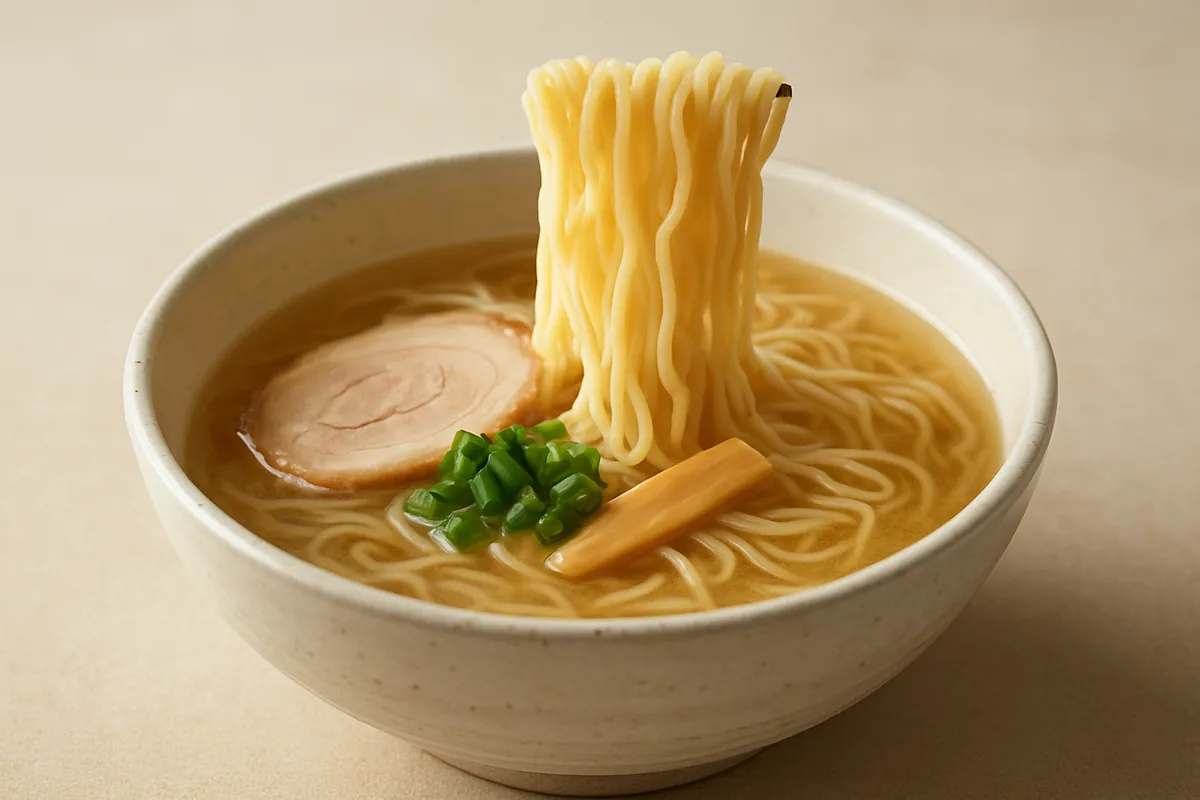
- Chashu, sliced braised pork, adds tender meat and savory richness; its soft texture contrasts with firmer noodles without changing their shape or bite.
- Menma, seasoned bamboo shoots, contributes a crisp, slightly fibrous chew and a savory note that stands apart from soft pork or egg.
- Scallions add a fresh, sharp aroma and a light crunch, giving each spoonful a brighter contrast to warm broth and richer ingredients.
- A soft-cooked egg adds a tender white and creamy yolk; halved, it spreads richness through the bowl while remaining easy to pick up with chopsticks.
These additions support rather than define the noodle’s texture: a bowl can pair several toppings with one noodle shape. Their contrasting bites make the combination of strands, broth, and ramen toppings feel more complete.
A Simple Classification of Ramen
Ramen styles can be grouped by the seasoning that gives the soup its leading flavor or by the character of the broth beneath it. These are two different ways to describe a bowl, not competing naming systems. A menu name may foreground a seasoning, a broth, or both, so the same bowl can fit more than one category. Comparing the labels helps clarify what each name tells you about the ingredients and flavor profile. The tables below separate seasoning bases from broth characters.
Classification by seasoning
Seasoning categories describe the concentrated flavoring added to the soup, commonly called tare, rather than specifying the stock by itself. Shoyu ramen identifies soy sauce as its seasoning base, while miso ramen names fermented soybean paste; the taste of either bowl still depends on the broth it is paired with.
| Style label | Seasoning base | Characteristic contribution | What the label identifies |
|---|---|---|---|
| Shoyu | Soy sauce | Savory, salty depth with a distinct soy aroma | A soy sauce-based seasoning, not a specific broth |
| Miso | Fermented soybean paste | Deep savory flavor; intensity varies with the paste | A fermented paste seasoning, not a specific broth |
| Shio | Salt, often combined with other seasonings | Direct salinity that can leave delicate broth flavors clear | A salt-seasoned profile, not a required stock recipe |
These labels are useful flavor cues, but they do not create mutually exclusive classes: a soy-seasoned bowl can use chicken or seafood stock, and miso can season a pork-based broth. The seasoning name tells you which base leads the flavor, while the liquid underneath may be described separately.
Classification by broth
Broth categories describe the main stock or its texture, rather than the seasoning used to finish the bowl. Tonkotsu ramen is named for its pork-bone broth; other broad descriptions distinguish cloudy, emulsified liquids from clearer chicken or seafood stocks.
| Broth character | Principal base | Typical texture | What the style name identifies |
|---|---|---|---|
| Tonkotsu | Pork bones simmered to extract marrow, collagen, and fat | Often opaque, rich, and emulsified | A pork-bone broth, not a seasoning base |
| Chicken paitan | Chicken simmered into a cloudy stock | Opaque and fuller-bodied than a clear stock | A creamy chicken-broth character |
| Clear chicken or seafood broth | Chicken, seafood, or a combination | Clear and comparatively light on the palate | A clear stock character and its principal ingredients |
Broth and seasoning categories can combine: tonkotsu may be finished with shoyu, miso, or salt-based tare, while a clear chicken and seafood broth can also carry different seasonings. Read a broth name as a clue to the soup’s base and body, then treat the seasoning label as a separate flavor description.
Tonkotsu, Shoyu, and Miso
Tonkotsu, shoyu, and miso describe familiar Japanese ramen varieties, but each name points to a different part of the bowl’s identity. Tonkotsu is associated with a pork-bone broth, while shoyu and miso identify seasonings. The distinction matters because broth and tare can be combined in different ways. Together, they shape the bowl’s body, aroma, and overall flavor profile.
Rich pork-bone broth
Tonkotsu broth is made by simmering pork bones, often at a vigorous boil that emulsifies fat and gelatin into a dense, opaque liquid. The exact method and cooking time vary by kitchen, but a long simmer is central to its characteristic richness.
A typical sequence moves from preparing the bones to building the finished bowl:
- Choose pork bones such as femurs or trotters; joints and connective tissue contribute gelatin, while the bone mix affects the broth’s body.
- Blanch the bones briefly, discard that first water, then rinse away foam and residue to start with a cleaner-tasting stock.
- Cover the cleaned bones with fresh water and simmer at a rolling boil, commonly for 10 to 18 hours, replenishing water as needed.
- Maintain steady heat so fat and gelatin disperse through the liquid; skim excess scum, but avoid removing all the fat that gives the broth its texture.
- Strain the finished broth, then ladle it over tare in a serving bowl; add sliced pork, scallions, and other chosen toppings.
The result coats the palate more heavily than a clear broth, with a creamy consistency that comes from emulsification rather than dairy. Tare supplies concentrated seasoning, while toppings add contrast in texture, salt, or freshness.
For more detail on bone preparation and simmering, consult a focused tonkotsu guide. The broth’s richness is most apparent when its seasoning and toppings remain distinct rather than overwhelming its pork flavor.
Soy sauce and miso
Shoyu ramen is seasoned with soy sauce, while miso ramen is seasoned with miso, a fermented soybean paste. These names identify the bowl’s seasoning, not one mandatory stock recipe: either tare can be paired with different broths, including chicken-based or seafood-based preparations.
In shoyu ramen, soy sauce brings salt, savory depth, and a characteristic aromatic sharpness. The flavor can range from clean and restrained to darker and more rounded, depending on the soy sauce, tare blend, broth, and added oils. A clear chicken broth often lets the soy seasoning read distinctly, while a richer stock can soften its edges. Shoyu therefore describes a soy-sauce-seasoned bowl, not a single fixed recipe or color.
Miso ramen uses fermented soybean paste for a fuller, more rounded profile. Miso can contribute savory depth, gentle sweetness, and a fermented aroma; different pastes and tare blends shift the balance. In a rich broth, its concentrated flavor stands up to the stock, while a lighter broth gives the seasoning more prominence. The paste may also be combined with aromatics or seasoning oils, so bowls bearing the same label can taste noticeably different.
When comparing the two, consider the seasoning’s character rather than assuming a particular broth: shoyu tends to foreground soy sauce’s savory, aromatic notes, whereas miso brings paste-like depth and a broader, more substantial impression. A focused shoyu-versus-miso comparison can help distinguish their flavor profiles and ingredients.
Regional Styles and Modern Variations
Place-based ramen reflects local habits and ingredients, while newer bowls draw on flavors from beyond Japan. Sapporo is among the best-known regional reference points, and Buldak-inspired bowls show how contemporary cooks reinterpret ramen. A regional name can suggest a familiar combination without fixing every detail. Restaurant recipes, noodle choices, and garnishes all contribute to the finished bowl.
Hokkaido ramen
Hokkaido is a northern Japanese island, and its ramen reputation includes several local traditions rather than one island-wide formula. Sapporo is often associated with hearty bowls and miso ramen, while ingredients such as corn and butter appear as familiar additions in some shops. These features are recognizable regional tendencies, not requirements for every bowl served in the city.
Other Hokkaido cities have their own ramen identities. Hakodate is commonly associated with a clear, salt-seasoned style, while Asahikawa is known for soy sauce flavors and a surface layer of fat that helps keep a bowl hot. Such associations can help diners interpret a menu, but recipes and ingredient choices differ between restaurants, even within the same city.
Local produce and seafood may also shape individual menus. A shop might add sweet corn, butter, or locally sourced seafood, while another keeps its bowl focused on noodles, broth, and a small selection of ramen toppings. Noodle thickness and texture vary too: Sapporo shops often use curly noodles, but the exact shape and firmness depend on the maker and restaurant. Hokkaido’s regional ramen styles are best read as strong local tendencies, with each shop interpreting them through its own recipe.
Spicy and cross-cultural bowls
Contemporary ramen shops and home cooks combine Japanese noodle bowls with spicy sauces and flavors borrowed from other cuisines. Buldak-inspired bowls are one example: they may take cues from intensely spicy Korean chicken noodles, but the ramen they become can vary widely in broth, seasoning, and garnish.
- A Buldak-inspired bowl may use a concentrated chili sauce for a direct, sharp heat, while a milder version balances chili with a richer broth.
- Chicken broth gives chili seasoning a savory base; a lighter seafood broth can make the same heat feel brighter and less heavy.
- Some cooks stir chili paste into the bowl, while others add it as a finishing sauce, making the heat easier to adjust at the table.
- Kimchi or pickled vegetables bring acidity and crunch, whereas corn or a soft-cooked egg can temper the impression of chili.
- Cheese, sesame, or scallions may add richness, nuttiness, or freshness, but no garnish is required for a Buldak-inspired variation.
Cross-cultural bowls can also combine Japanese-style noodles with Korean chili paste, curry spices, or other seasonings. The balance changes with the sauce’s intensity, the broth’s body, and the toppings chosen, so Buldak-inspired ramen describes a family of adaptations rather than one standard recipe.